Custom Kitchen Cabinets Cost can vary greatly depending on your materials, finishes, and design preferences. Investing in custom kitchen cabinets is a powerful way to elevate your home’s beauty, function, and long-term value. These key insights deliver essential information to help you budget smartly, choose the right materials, and maximize both daily enjoyment and resale appeal—while embracing innovation and craftsmanship.
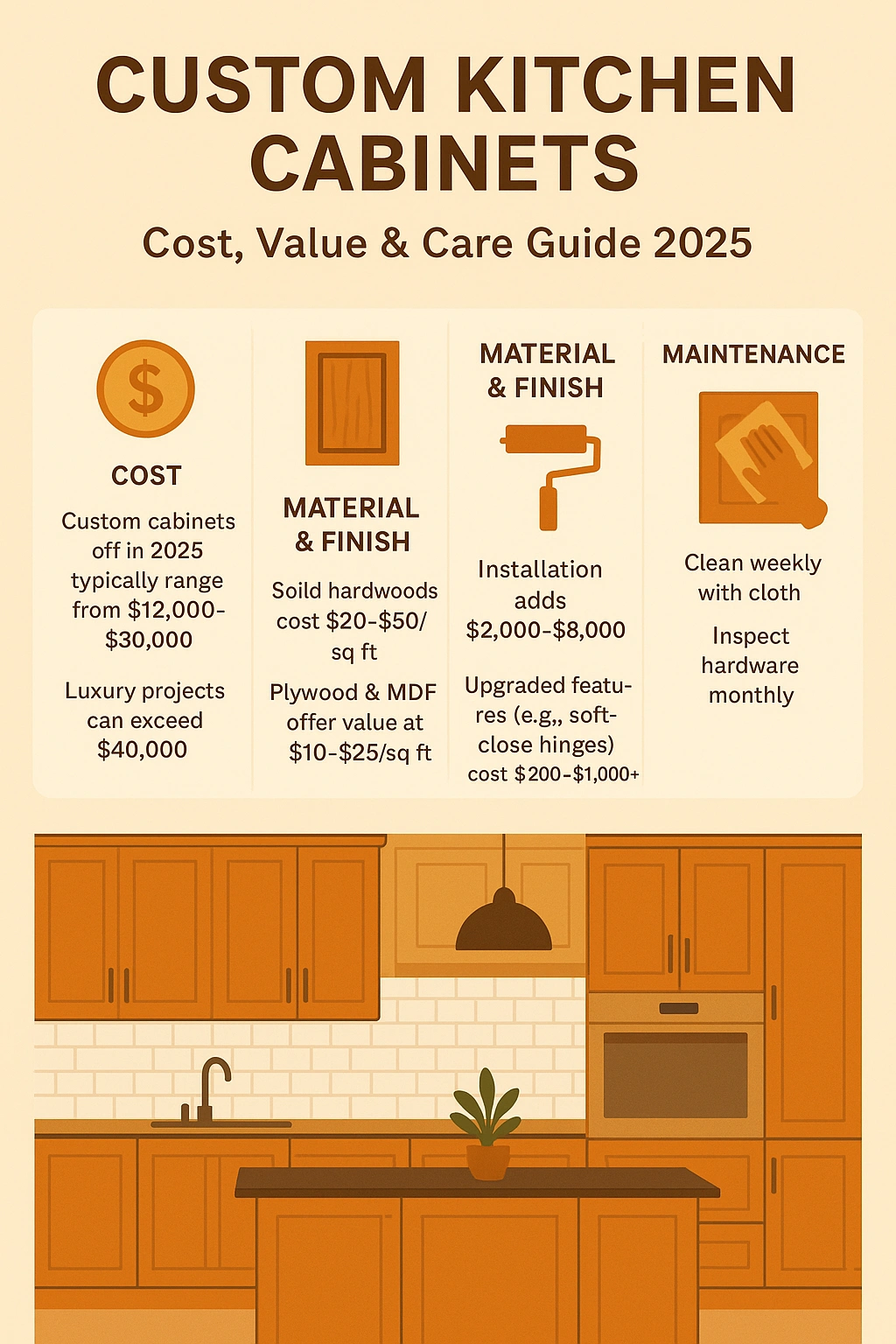
- Custom cabinet costs in 2025 generally range from $12,000–$30,000, with luxury projects topping $40,000+; expect linear foot pricing of $500–$1,200 depending on your selections.
- Material and finish choices are the top cost drivers—solid hardwoods command $20–$50/sq ft, while plywood and MDF deliver excellent value and durability at $10–$25/sq ft.
- Special features and installation add up fast; allow $2,000–$8,000 for installation and budget $200–$1,000+ per upgraded feature (e.g., soft-close hinges, lighting).
- Strategic planning with clear, itemized quotes prevents budget surprises—separately price out demolition, installation, and specialty options for maximum clarity.
- Mixing visible premium materials with budget-friendly interiors (like hardwood faces and plywood sides) creates a bespoke look at a smarter price.
- Professional installation takes 2–3 months from design to completion; ensure a seamless result by partnering with licensed, reputable providers who offer robust aftercare.
- Custom cabinetry delivers lasting value, often recouping 60–80% of the investment at resale, especially when designs are timeless and craftsmanship is high.
- Ongoing care is simple but crucial—clean weekly with soft cloths, wipe spills immediately, and inspect hardware monthly to keep custom cabinets flawless for years.
With these expert strategies, you can create a kitchen that’s beautiful, functional, and uniquely yours. Dive into the full article to unlock inspiration, proven planning advice, and the latest design innovations for your next cabinetry project.
Introduction
If you’ve ever opened your kitchen cabinets and thought, “This just isn’t working for us,” you’re not alone. Custom cabinets transform not just the look, but also the daily flow of your kitchen—yet understanding what to expect from cost, value, and care in 2025 can feel overwhelming.
Here’s the reality: a well-designed custom kitchen can deliver everything from precise storage to increased home value, but average investments now range from $12,000 to $30,000, with luxury projects climbing past $40,000. That’s no small sum, so knowing where your money goes—and how to make it count—is crucial.
Choosing custom cabinetry means every decision is tailored to your life: your cooking style, your family routines, your unique space. Whether you’re a homeowner dreaming of an inviting hub, a designer seeking standout details, or a contractor tackling the latest remodeling trends, having the right guide can turn a complex process into a creative collaboration.
This comprehensive guide unlocks:
- Key cost drivers—from materials and finishes to hidden fees and labor rates
- Value-enhancing choices that maximize both functionality and resale impact
- Pro tips for budgeting and partnering with trusted, craft-focused professionals
- Care and maintenance strategies that protect your investment and keep it stunning for years
You’ll discover practical examples, the latest finish trends, and smart strategies that combine long-term durability with everyday beauty—plus fresh ideas for personalized storage that make life simpler and kitchens last longer.
Investing in custom cabinets isn’t just about the price tag—it’s about crafting a kitchen that feels uniquely yours. Explore how upfront planning and thoughtful choices can help your project succeed—starting with a closer look at today’s cost landscape and what truly drives your investment.
Understanding Custom Kitchen Cabinets Cost in 2025
Custom kitchen cabinets in 2025 set the stage for a kitchen that’s truly your own, but price points vary widely depending on your choices and region.
Expect average project costs to range from $12,000 to $30,000 for standard kitchens, with high-end, luxury installations exceeding $40,000—think statement-making finishes and intricate layouts.
Linear foot pricing typically lands between $500–$1,200 but can drop to $300–$400 for streamlined options or push past $1,500 for top-of-the-line details.
“Upgrading your cabinets is a lasting investment—picture your ideal kitchen, designed for how you live, not just how it looks.”
Main Cost Drivers to Watch
Several factors shift the price tag:
- Material choice: Solid hardwoods (like walnut/cherry) run $20–$50/sq ft, while plywood and MDF bring excellent value at $10–$25/sq ft.
- Finish selection: Painted, stained, or specialty surfaces can increase both looks and costs.
- Fabrication complexity: Unique shapes, full-ceiling cabinetry, and intricate customization add labor hours and price.
- Geographic labor rates: Expect higher costs in metropolitan areas and markets with busy renovation schedules.
Installation is usually $2,000–$8,000—either 30–50% of your cabinet cost or billed hourly at $50–$150/hr.
Every added feature—pull-out organizers, soft-close hinges, integrated lighting—adds $200–$1,000+ per feature, quickly multiplying project totals.
Hidden and Additional Costs
Beyond the cabinets themselves, savvy remodelers factor in:
- Demolition/removal of old cabinets
- Permitting in regulated towns or historic districts
- Specialty hardware or custom appliances
- Custom countertops and backsplashes (often separate from the cabinet quote)
Supply chain fluctuations in 2025 mean regional price swings and occasional delays, making early planning and transparent quotes more important than ever.
“Getting a clear, itemized breakdown prevents budget surprises—and lets you invest in what matters most.”
—
How to Estimate and Compare
Use this quick framework to shape your project:
- Start with size: Measure your linear footage for a base cost estimate.
- List must-have features: Prioritize where you want to upgrade (think: functional storage vs. luxury finishes).
- Request separate quotes: For installation, demolition, and any extras.
- Compare local vs. national custom makers: Review portfolios, not just prices.
- Account for supply chain trends—prompt decisions help secure materials and lock in costs.
Whether you’re picturing a cozy family space or a sleek chef’s kitchen, custom cabinetry can transform daily life—but smart, upfront cost planning ensures your dream stays within reach.
Custom Cabinetry Materials & Finishes: Choices, Trends, and Value
Achieving the perfect custom kitchen starts with smart choices on materials and finishes—the backbone of both style and practicality.
Today’s most sought-after cabinet materials include:
- Hardwoods (walnut, cherry): Top-tier beauty and durability, typically $20–$50/sq ft.
- Plywood: Stable, moisture resistant, often used for interiors at $10–$25/sq ft.
- MDF (Medium-Density Fiberboard): Smooth for painted finishes and economical.
- Particleboard & composites: Budget-friendly, less durable, suitable for low-impact areas.
“Your cabinet’s core material sets both its strength and its story.”
Comparing Costs and Everyday Performance
Each material brings a unique balance of price, care, and resilience.
- Solid hardwoods: Luxury feel, highest cost, routine dusting, occasional conditioning.
- Plywood: Holds up in humid kitchens, resists warping—wipe spills quickly to avoid edge damage.
- MDF: Seamless look with paint, requires gentle cleaning to prevent swelling.
- Composites/particleboard: For low-traffic nooks; avoid heavy loads, protect from moisture.
Imagine a family kitchen with warm cherry face frames but budget-smart plywood sides—polished elegance with practical savings.
“Little choices—like visible hardwoods paired with plywood interiors—can unlock big style on a smart budget.”
Finish Options & Trends for 2025
Today’s finishes define cabinet character and simplify upkeep.
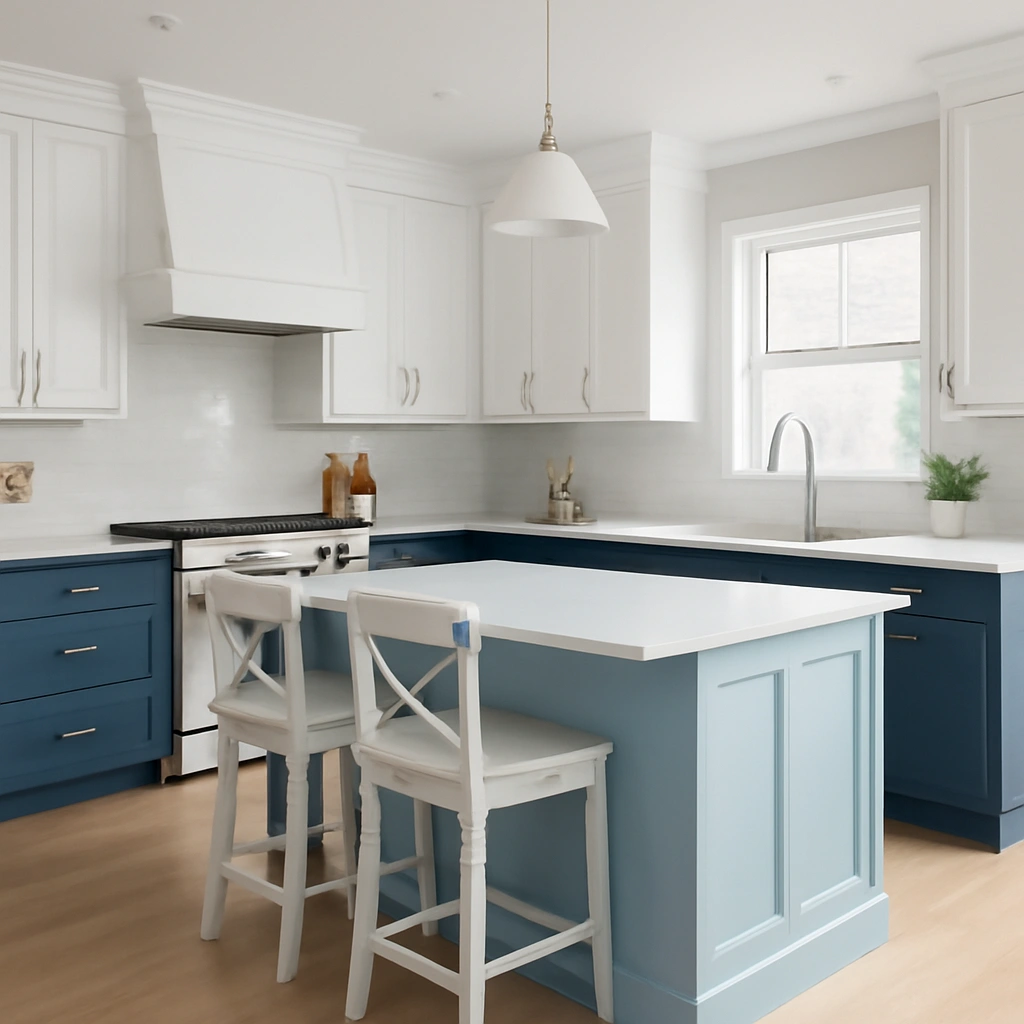
- Painted: Crisp, customizable color—trending in calming creams and bold navies.
- Stained: Highlights natural wood grain; ideal for warm, inviting looks.
- High-gloss/glazed: Modern shine; fingerprints show, so best for lower-touch zones.
- Matte & specialty surfaces: Less smudge, more texture; perfect for busy households.
- Eco-friendly coatings: Low-VOC, water-based, and upcycled woods are gaining traction.
Picture this: Sunlight catches a soft-matte oak island, while high-gloss uppers reflect golden under-cabinet lighting—pure kitchen drama and modern comfort.
Matching Materials to Your Lifestyle
Don’t just follow trends—choose materials and finishes that fit daily realities.
- For busy cooks or families: Go for stain-resistant, matte or semi-gloss.
- Open, sunlit spaces: Opt for UV-resistant finishes to prevent fading.
- High-traffic zones: Durable plywood or hardwood face frames withstand years of use.
Consulting with your cabinetmaker helps you align function, style, and resale value—all while optimizing your investment for 2025’s design-forward market.
Thoughtful material and finish choices aren’t just about looks—they’re about creating lasting value in every cabinet you open.
Installation Process and Professional Partnering
Mapping the Custom Cabinet Journey
Picture this: Your kitchen transforms from blueprint to showpiece, one carefully orchestrated phase at a time. Custom cabinet installation typically unfolds as a series of precise steps:
- Design consultation – Gather inspiration, confirm layouts, finalize materials and finishes.
- Detailed site measurements – Ensures exact fit, avoiding costly surprises later.
- Fabrication – Cabinets are built to order, often taking 6–12 weeks based on complexity and supplier timelines.
- Preparation – Removal of old cabinets (demolition, dust barriers), prepping utilities (electrical, plumbing), and readying the space.
- On-site installation – Skilled installers assemble and secure cabinetry, typically in 2–7 days for most kitchens.
- Final inspection and touch-ups – Every detail checked, hardware adjusted, surfaces cleaned for a flawless result.
Average install time in 2025 runs 2–3 months from design through project wrap-up for mid-to-large kitchens, with fabrication speed influenced by demand and supply chain trends.
Key Roles and Timeline Expectations
Your experience depends on the collaboration between designer, cabinetmaker, and installer. Here’s what to expect:
- Cabinetmaker: Delivers accurate measurements, ensures craftsmanship, coordinates delivery.
- Installer: Installs, aligns, and finishes cabinetry, manages site workflow.
- Homeowner/Designer: Approves milestones, addresses questions promptly, clears the workspace.
Quick tip: Clear communication at every checkpoint avoids delays and keeps the vision on track.
Overcoming Challenges and Choosing the Right Partner
Kitchen layouts with tricky corners, historic homes with uneven floors, or last-minute appliance changes can create hurdles. Proactive solutions include:
- On-site adjustments for “out-of-square” walls or surprise plumbing.
- Scheduling a “pre-install walk-through” to anticipate site-specific issues.
Selecting a reputable provider is essential. Always:
- Request proof of licensing and insurance
- Review a partner’s portfolio and client testimonials
- Ask for a clear, itemized contract outlining scope and discounts for aftercare
Value Beyond Installation
A truly exceptional cabinetmaker offers after-sales support—think touch-up kits, prompt responses to warranty requests, and periodic maintenance reminders.
When you partner with experienced professionals, you get more than beautiful cabinetry. You gain peace of mind, robust aftercare, and a result that feels built just for you—because it is.
Key takeaway: The right installation partner streamlines the entire journey, from concept to completion, letting you enjoy custom cabinetry that’s both beautiful and built to last.
Custom Cabinet Value: ROI, Resale, and Long-term Benefits
Installing custom kitchen cabinets is more than a design statement—it’s a smart investment that transforms how your home looks, functions, and appeals to buyers.
Custom cabinets optimize awkward layouts, fit seamlessly into every corner, and provide a tailored finish you simply won’t find in stock cabinetry.
Discovering Real World ROI
Custom solutions bring value in four key ways:
- Maximized storage space with specialized organizers, hidden drawers, and precise fit
- Seamless integration for appliances—think built-in fridges, hidden microwave alcoves, and more
- Premium surface finishes and hardware that elevate the entire kitchen aesthetic
- Personalization—your style, your way, from handles to color to layout
Data for 2025 shows that custom cabinets boost resale value, often recouping 60–80% of their initial cost if quality is high and design timeless.
“Every detail in custom cabinetry is designed to make daily life smoother and to impress buyers the moment they walk in.”
“A well-built custom kitchen becomes the showpiece of the home, capturing both functionality and true craftsmanship.”
Custom vs. Prefab: Durability and Resale
Comparing custom cabinetry to prefab or stock options:
- Custom cabinets last 20+ years with proper care, far outpacing most prefab models
- Resale appeal is stronger—realtors note buyers consistently rate custom kitchens as a top selling point
- Prefab may fit simple spaces, but unique homes and high-end buyers expect tailored solutions
Consider a recent project: a mid-century home in Oak Park received custom walnut cabinetry, instantly raising its listing price by 12% and reducing time on the market to just eight days.
When Custom Cabinets Make Sense
Ask yourself:
- Does my space have difficult dimensions or require unique solutions?
- Am I investing for long-term enjoyment or prepping to sell in a competitive market?
- Do I value premium finishes, precision fit, and design flexibility?
- Is my home in a market where buyers pay for higher-end features?
A client testimonial: “After upgrading to custom cabinets, our open-concept kitchen became the heart of our gatherings—we noticed guests gravitating to the space thanks to its exceptional style and functionality.”
Navigating the Tradeoffs & Trends
Keep in mind:
- Custom cabinetry delivers maximum ROI in high-end homes, renovations with integrated appliances, and spaces where standard cabinets fall short
- Beware of over-customizing in modest neighborhoods or choosing ultra-trendy finishes that may date quickly
- Focus on quality craftsmanship, timeless materials, and well-thought layouts for the strongest long-term value
Investing in custom kitchen cabinets means choosing enduring beauty, improved daily living, and enhanced home value—the kind of upgrade that benefits you now and pays back if and when you sell.
Maintenance Practices to Preserve Beauty & Function
Fast Facts: Daily, Weekly & Seasonal Routines
Regular maintenance keeps your custom cabinets looking and performing their best for years—protecting an investment typically worth $12,000–$30,000.
Think of your cabinets like fine furniture: gentle, consistent care is the secret to preserving beauty.
- Dust exterior surfaces weekly with a soft microfiber cloth—dirt buildup can scratch even the toughest finish.
- Wipe cabinet faces as needed using mild dish soap and water. Always dry with a clean towel to prevent streaks and water damage.
- Deep clean interiors monthly by removing contents, wiping surfaces, and reorganizing storage.
A spotless kitchen starts with “Little habits, big results.” Picture this: you glide a microfiber cloth across rich walnut grain, watching the natural gloss return instantly.
Material-Specific Care (And What to Avoid)
Cabinet finish matters—caring for wood, MDF, laminate, and painted cabinets means choosing safe products and techniques.
- Wood: Use a wood-safe cleaner; wipe with the grain for a streak-free shine.
- Painted: Warm, soapy water only—skip abrasives and harsh pads that scratch.
- Laminate: A barely-damp cloth prevents seam swelling—never soak.
- General rule: Avoid abrasive cleaners, waxes, and petroleum polishes that can dull or damage premium finishes.
If you splash coffee or pasta sauce, clean spills right away—lingering liquids cause stains or swelling, especially on seams and joints.
Protection, Repairs & Spot Checks
Kitchens work hard, but little steps preserve cabinetry value.
- Limit direct sunlight with blinds or curtains—prevents trendy matte and classic wood finishes from fading.
- Keep cabinets away from heat (stoves, toasters); use shields or heat-resistant liners nearby.
- Never place rubber or plastic directly on cabinet surfaces—use felt or soft liners to prevent chemical reactions with finishes.
Monthly, inspect for loose hinges, faded spots, or dull hardware:
- Tighten screws and adjust alignment as needed.
- Use a touch-up kit for minor chips; call a professional for deep scratches or warping.
A five-minute check each month can save you thousands in repairs—“Spot early, fix fast, keep it flawless.”
Maintenance Checklist & Lifespan Tips
| Task | Frequency | Key Action |
|—————————–|—————|———————————————–|
| Dust & wipe faces | Weekly | Microfiber cloth, dry thoroughly |
| Deep clean interiors | Monthly | Remove items, gentle cleaning |
| Inspect hardware/fixtures | Monthly | Tighten, adjust as needed |
| Clean up spills | Immediately | Wipe, dry to avoid damage |
| Maximize protection | Ongoing | Use liners, manage light and heat |
| Touch-ups/repainting | As needed | Professional for big repairs, DIY for chips |
Proper care adds years—well-maintained cabinets often outlast 15-year prefab models, retaining resale and daily value.
With a little routine attention and immediate spill cleanup, your cabinets will always be ready for guests—and the next chapter in your home’s story.
Maximizing Value: Cost-Saving Strategies and Smart Planning
Planning custom kitchen cabinets? Smart choices can make every dollar work harder—without giving up quality, beauty, or function.
For most homeowners in 2025, cabinet budgets range from $12,000 to $30,000—but savvy planning means you don’t need a luxury price tag to get a luxury result.
Know Where to Invest
Select a few premium features where visual and functional impact is highest, and balance with standard options elsewhere:
- Go for solid wood, soft-close hardware, or custom paint finishes on high-traffic cabinets
- Specify budget-friendly materials (like plywood or MDF sides) for interiors or hidden areas
- Limit specialty features (appliance garages, glass fronts, custom dividers) to only where you truly need them
“Choosing where to splurge and where to save is the secret to stunning kitchens—and a wise budget.”
Standard Sizes and Modular Design
Picture this: clean, minimalist kitchen lines thanks to modular base units—but with a single wall of showstopper custom cabinets.
Leverage standard-sized boxes or use modular components for most of your layout, then:
- Add custom-built elements only for unique corners or awkward spaces
- Choose islands or pantries in flexible, standard sizes to cut fabrication costs
“Standard isn’t boring—when paired with a few custom details, it looks bespoke for less.”
Precise Quotes, Negotiation, and DIY Options
Always request itemized quotes and clarify the full scope upfront.
- Ask for separate pricing on materials, installation, demolition, and special features
- Review each line for clarity—and negotiate any items that seem non-essential
- Identify simple prep, hardware removal, or painting tasks that you can handle safely
When in doubt, leave installation and structural mods to professionals—saving on costly fixes later.
Collaboration and Real-World Examples
Work closely with your designer and contractor—they can suggest creative ways to maximize budget.
Take “the Carter project” (2024): homeowners achieved a magazine-worthy walnut look by pairing standard-size MDF boxes with a single custom walnut range hood and matching floating shelves.
“Small, focused splurges deliver wow factor—without overspending.”
Thoughtful planning unlocks lasting value: a kitchen tailored to your life, your home style, and your financial comfort—proving that value and creativity go hand-in-hand.
Advanced Customization Options & Innovative Solutions
Picture this: You open a sleek cabinet, and shelves glide out with a gentle touch—your spices, pans, or utensils perfectly organized and illuminated by soft LED lighting.
Custom storage features are defining 2025’s most desirable kitchens, transforming how we cook and live.
- Pull-out racks save steps by putting everything at your fingertips
- Smart organizers maximize every inch—think tray dividers, corner carousels, deep pan drawers
- Integrated lighting highlights interiors and makes midnight snack raids effortless
- Accessible solutions (lowered shelves, full-extension drawers) ensure everyone can reach what they need
Designers report that over 60% of homeowners now request integrated lighting or pull-outs with new cabinetry—because daily convenience truly matters.
Trending Custom Tech & Smart Storage
Today’s custom cabinets fuse new tech with time-tested craftsmanship.
- Touch-open doors—a slight push opens even hands-full cabinets
- LED lighting systems—energy-efficient, customizable illumination in drawers and glass-front uppers
- Hidden appliance garages—slide up a panel and reveal your toaster, coffeemaker, or charging station
- Built-in charging docks—USB and wireless charging, tucked subtly inside
These innovations allow even small or oddly-shaped kitchens to feel larger and smarter, eliminating clutter while elevating daily rituals.
“Integrated, illuminated storage is the feature homeowners rave about a year later,” says one IL Cabinets client.
Space-Saving Examples & Experience-Driven Design
Maximize value and style, even in a compact condo or historic home:
- Vertical pull-outs beside the range—hold oils and utensils
- Custom corner solutions—lazy Susans, L-shaped drawers
- Drawer-in-drawer systems—store utensils above pans, boosting efficiency
- Deep appliance pull-outs—keep counters clear and mornings organized
These options often add $200–$1,000+ per feature, but the ROI comes in daily convenience and long-term home value.
Balancing Innovation & Long-Term Value
Choose upgrades that solve real, daily frustrations, not just what looks cool in the showroom.
- Talk with your cabinetmaker about your cooking, storage, and accessibility needs—IL Cabinets’ team turns unique ideas into functional reality
- True innovation means new tech, but also longevity: soft-close hardware, quality finishes, reliable fit
- Look for a portfolio of real-world installations—not just catalog photos—to see smart customization in action
Custom cabinets in 2025 are about intuitive design and seamless technology: the features you interact with daily are where advanced solutions shine.
A well-chosen mix of smart storage and classic craftsmanship ensures your kitchen stands the test of time, both in beauty and in everyday life.
Conclusion
Custom kitchen cabinets are more than a design statement—they’re a powerful way to enhance your home’s beauty, function, and long-term value. The right planning can help you create a kitchen that’s uniquely yours and built to last, balancing craftsmanship, innovation, and smart budgeting.
You have the tools to make confident choices, maximize your investment, and ensure your new space feels as good as it looks—day after day.
—
Key Takeaways:
- Prioritize a clear, itemized quote to avoid surprises and invest where it matters most to you.
- Match materials and finishes to your lifestyle for cabinets that stand up to daily use and deliver lasting style.
- Plan for smart storage and efficient layouts—innovative solutions make all the difference in both daily use and resale value.
- Maintain routine cleaning and care—small habits today protect your cabinets (and investment) for years to come.
- Partner with reputable professionals who understand your vision, offer aftercare, and focus on quality from start to finish.
—
Next Steps:
- Measure your kitchen’s linear footage and list your must-have features—this grounds your budget and design direction.
- Schedule a personalized consultation with a trusted custom cabinetmaker like IL Cabinets to explore materials, finishes, and innovation.
- Request itemized project quotes and review portfolios to ensure you’re working with experts who value craftsmanship and client service.
- Identify 1-2 areas where you’ll splurge and areas you’ll save—this keeps your dream kitchen affordable without compromise.
—
A kitchen designed for how you live isn’t just a wish—it’s a practical investment, ready to elevate every meal, gathering, and daily moment. Let your vision and smart planning turn possibility into reality—because your home deserves cabinetry as unique as you.
“Quality cabinetry crafts more than storage—it shapes the heart of your home, one thoughtful choice at a time.”
FAQs
1. How much do Custom Kitchen Cabinets cost in 2025?
On average, Custom Kitchen Cabinets range from $12,000 to $30,000 in 2025, depending on size, materials, and finishes. Luxury designs with premium hardwoods can exceed $40,000.
2. Are Custom Kitchen Cabinets worth the investment?
Yes. Custom Kitchen Cabinets deliver 60–80% ROI and offer superior craftsmanship, storage optimization, and design flexibility—making them one of the smartest home upgrades.
3. How long do Custom Kitchen Cabinets last?
With proper care, Custom Kitchen Cabinets can last over 20 years. Routine cleaning, moisture protection, and hardware maintenance preserve their beauty and function.
4. What materials are best for Custom Kitchen Cabinets?
Top materials include solid hardwoods, plywood, and MDF. At IL Cabinets, we help clients choose the perfect balance of durability, cost, and aesthetics.
5. Where can I get expert help designing Custom Kitchen Cabinets?
You can contact our experienced team at IL Cabinets to explore design options, request quotes, and create the kitchen of your dreams.