Custom Kitchen Cabinets and Countertops create the foundation of a functional, beautiful, and long-lasting kitchen. Choosing the right pairing transforms your space, improves workflow, and enhances daily comfort. This guide explores how to match Custom Kitchen Cabinets and Countertops through color, contrast, material, and proportion—so your kitchen feels cohesive, modern, and uniquely yours.
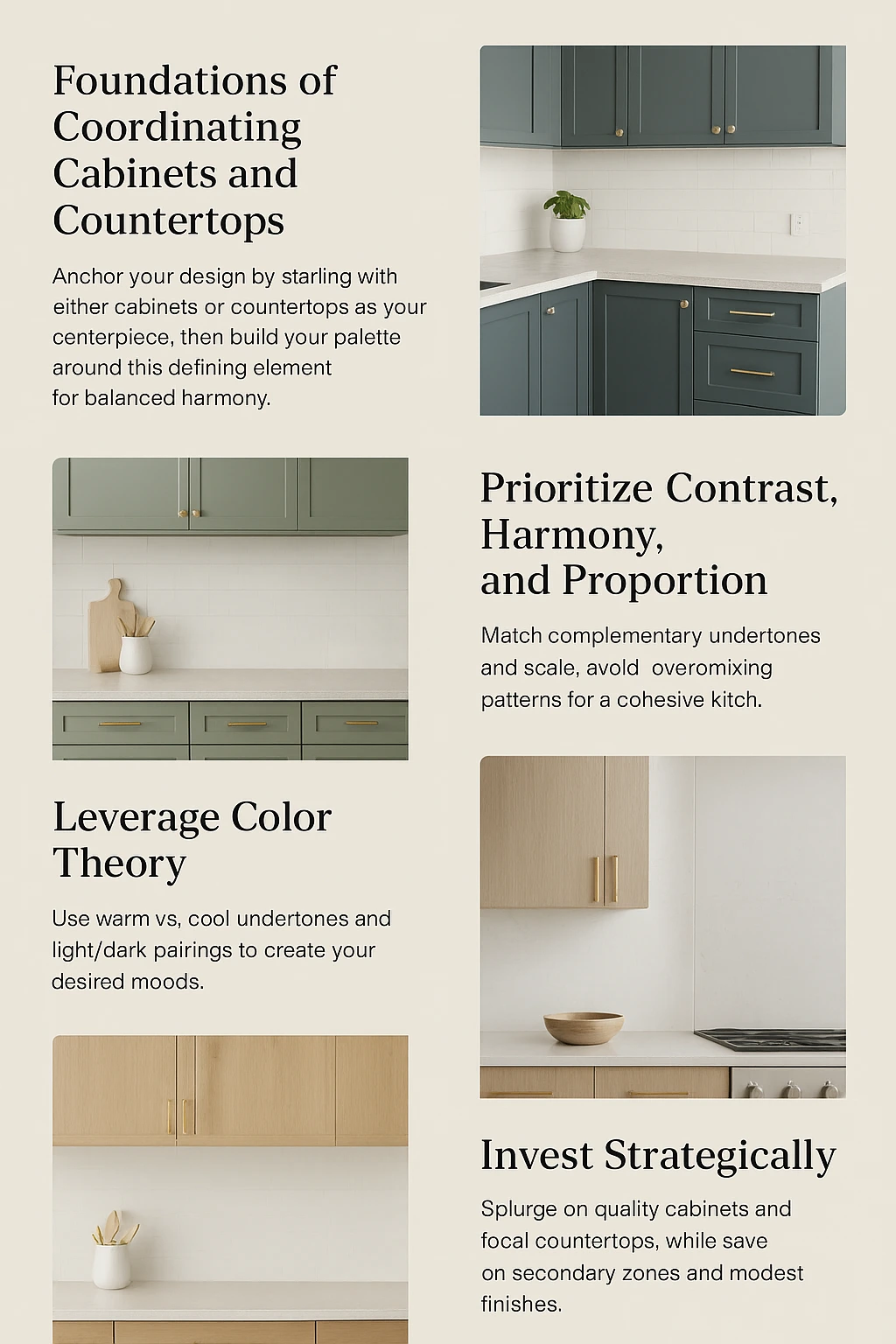
- Anchor your design with purpose by starting with either cabinets or countertops as your centerpiece, then build your palette around this defining element for balanced harmony.
- Prioritize contrast, harmony, and proportion** to avoid common mistakes—match complementary undertones and scale; skip overmixing patterns for a cohesive, visually pleasing kitchen.
- Leverage color theory basics by using warm vs. cool undertones and light/dark pairings to create desired moods, from bright and airy to bold and dramatic.
- Blend texture and finish smartly—mix matte cabinets with glossy counters, or subtle wood grain with dramatic stone, for visual depth and easy maintenance.
- Select trending pairings like warm wood with creamy quartz or navy cabinets with soft-gray counters to make your kitchen instantly fresh and “showroom ready.”
- Invest strategically: Splurge on quality cabinets, focal countertops, and custom edge profiles while saving on secondary zones and modest finishes to maximize value.
- Partner with professionals for custom work—experienced designers and installers ensure precise fit, flawless transitions, and ongoing aftercare for lasting results.
- Ask key questions upfront: Clarify costs, included services, installation timelines, and warranties to avoid surprises and ensure your project aligns with both vision and budget.
Upgrade your kitchen by applying these core principles, then check out the full article for inspirational pairings, expert planning advice, and real project examples.
Introduction
You open your kitchen cabinets every day—but have you ever noticed how the right combination of cabinet and countertop feels welcoming from the very first glance?
Whether you’re a homeowner dreaming of a functional showpiece or a designer shaping your next signature project, choosing the perfect cabinet-countertop pairing shapes not just your kitchen’s look, but its livability for years to come.
Getting it right means avoiding common pitfalls that waste time and money, like mismatched undertones or overlooked details that clash in real life.
Instead, when cabinets and counters are planned together, you unlock spaces that feel generous, grounded, and effortless to keep beautiful.
This article is your guide to cabinets and countertops that don’t just “match”—they elevate your home’s style and enhance everyday use.
You’ll discover:
- How to coordinate contrast and harmony to create instant visual flow
- Top trends for 2025, including the rise of matte finishes and warm wood tones
- The design secrets behind balance, proportion, and timeless color choices
- Expert tips for pairing textures and patterns without visual clutter
Plus, you’ll get actionable advice on:
- Smart budgeting strategies for high-impact results
- How to avoid common design mistakes
- When to collaborate with professionals for a stress-free project
If you want your kitchen to be both inspired and functional—crafted around your everyday needs—these insights will make every design choice easier and more rewarding.
Let’s explore how the right cabinet and countertop pairing becomes the foundation of your dream kitchen, starting with the fundamentals of color, material, and design harmony.
Foundations of Coordinating Cabinets and Countertops
Creating a dream kitchen begins with understanding how contrast, harmony, and proportion work together to form a cohesive space.
The most successful remodels start by choosing an anchor element—either your custom cabinets or your countertop—then building the rest of the palette around it.
Homeowners and designers today are prioritizing balance and personalization. For 2025, expect to see:
- Warm wood tones paired with creamy quartz
- Bold, dark cabinetry contrasted by light natural stone or quartzite
- High-performance, low-maintenance materials like engineered stone and matte finishes
Defining Your Vision and Avoiding Common Pitfalls
Begin with a clear vision or mood board centered on a favorite cabinet style, stone color, or countertop material.
Avoid the top three design mistakes:
- Overmixing patterns, leading to visual clutter
- Pairing clashing undertones (e.g., warm wood with cool granite)
- Ignoring the scale and proportion of space (oversized islands can overwhelm smaller kitchens)
Picture this: Pairing espresso cabinets with white quartz instantly grounds the room, while tonal, monochrome pairings (all-whites or all-grays) can make compact spaces feel light and expansive.
Understanding Color Theory for Kitchens
Getting color right is central to a truly inviting kitchen. Use color theory basics:
- Warm undertones: Woods with yellow/red notes, beige/cream countertops
- Cool undertones: Gray-painted cabinets, marble or blue-gray quartz
Try these color theory strategies:
- Choose complementary or analogous color schemes using the color wheel
- Experiment with light/dark contrast: Light cabinets expand space, dark counters anchor and dramatize
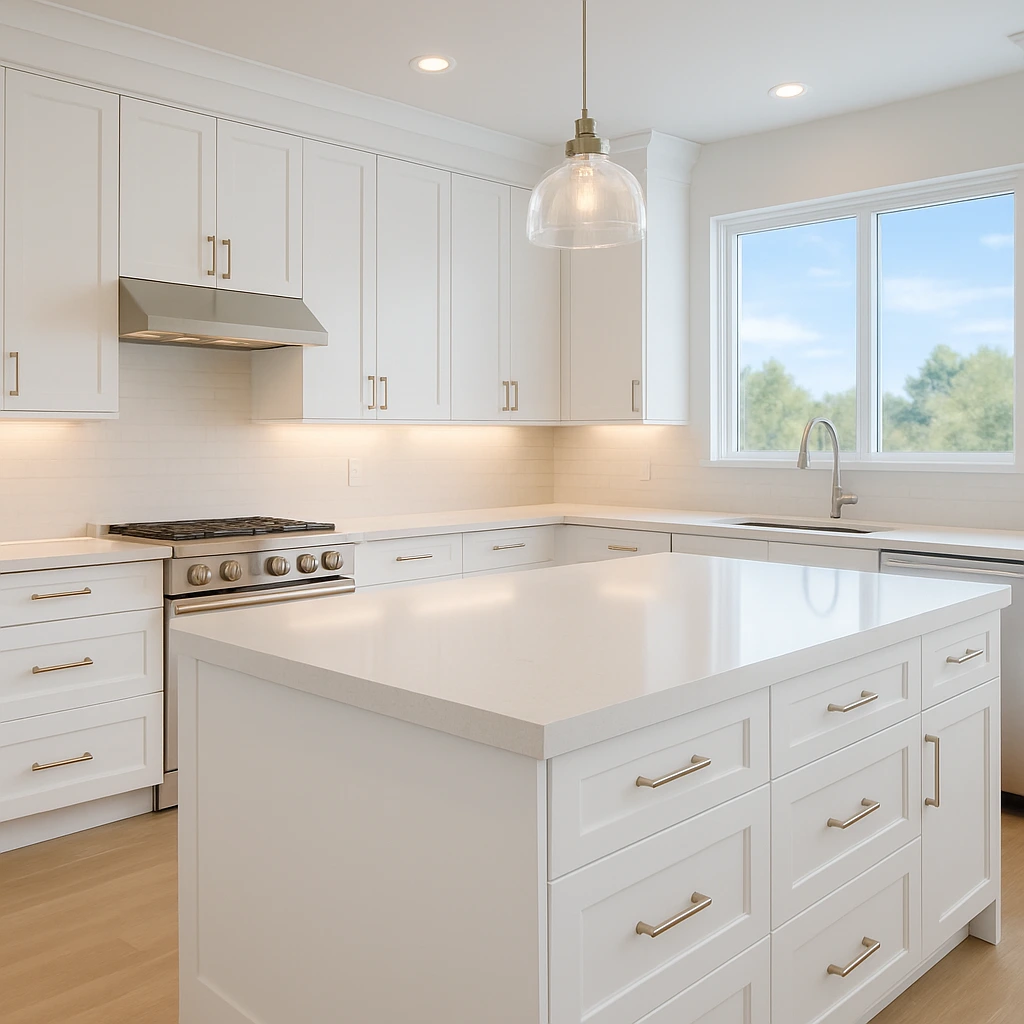
- Go for a monochromatic look: White cabinetry with white marble = modern, fresh, and bright
Real-life inspiration: Navy cabinets with soft-gray quartz countertops are trending, creating a confident focal point that’s “showroom-ready” for video content and portfolios.
Balancing Texture, Pattern, and Finish
A visually interesting kitchen pairs texture and pattern wisely.
Coordinate surfaces by:
- Blending a subtle cabinet grain with a stone that features dramatic veining
- Combining matte cabinet finishes with polished stone for tactile variety
- Matching finishes (gloss with gloss) for a seamless aesthetic, or contrasting (matte with textured) for depth
Consider long-term care:
- Matte countertops hide wear and fingerprints
- Natural wood ages gracefully, especially when sealed routinely
- High-gloss stones require more frequent cleaning to stay pristine
Smart pairing means every finish, grain, or pattern works together—never against each other.
When you match material, color, and finish with intention, your kitchen transitions from ordinary to extraordinary—a space you love stepping into, every single day.
Popular Cabinet and Countertop Pairings
Pairing custom kitchen cabinets and countertops sets the entire tone for your kitchen, blending function and style in every detail.
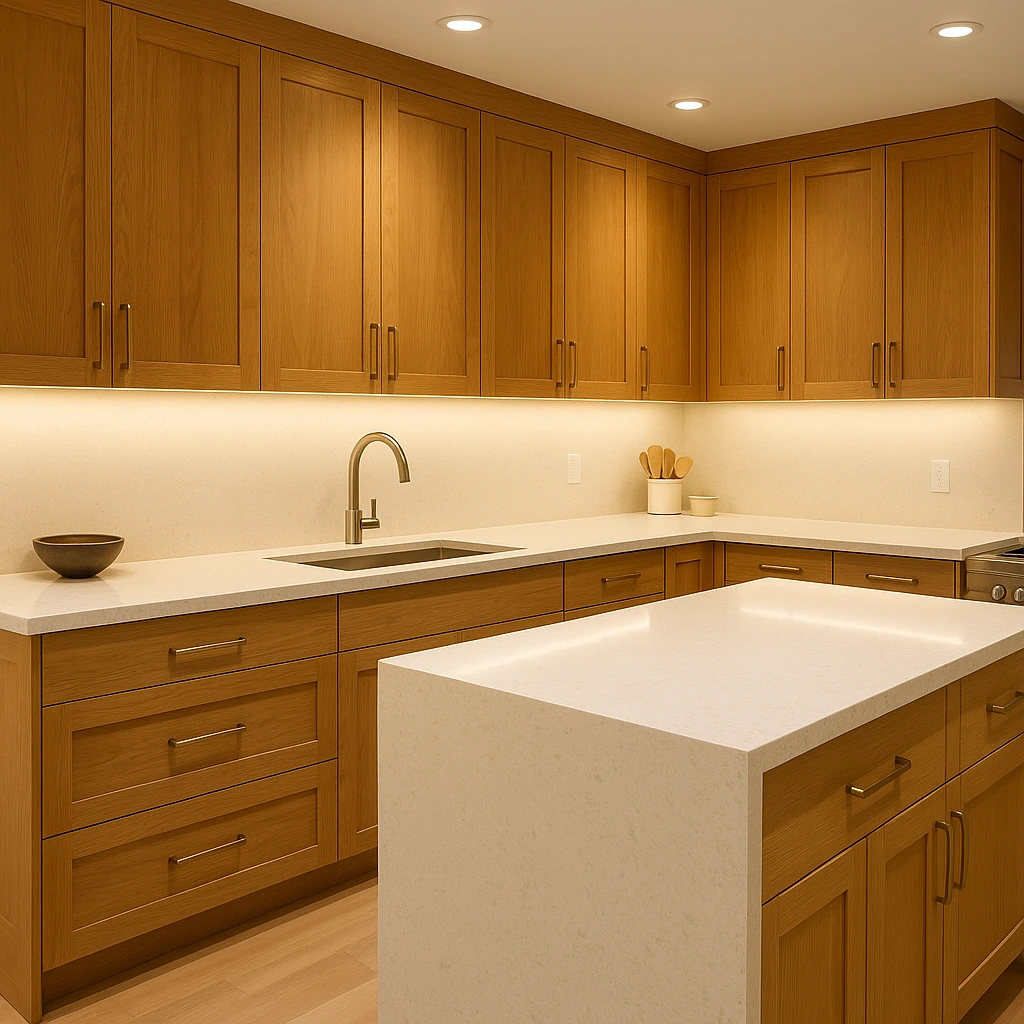
The most in-demand combinations are designed around either bold contrast or subtle harmony—picture crisp white cabinets with striking black marble, or natural wood paired with creamy quartz for a fresh, inviting feel.
Classic and Contemporary Pairing Profiles
White Cabinets
- Popular Countertops: Black granite, marble, white quartz
- Style Focus: Achieve either a timeless contrast (black granite, marble) or a sleek, modern minimalism with white-on-white quartz.
A white and black pairing feels like crisp, tailored attire for your kitchen—classic, always in style.
Natural Wood Cabinets
- Pairings: Light quartz, soapstone, honed white stone
- Benefits: Highlights the unique grain and natural warmth of wood, especially when paired with soft, matte finishes.
Soapstone ages beautifully, taking on a lived-in patina that tells the story of your kitchen over time.
Dark or Bold-Colored Cabinets
- Countertops: Light granite, white quartz, light wood
- Impact: Creates a dramatic statement; light surfaces brighten the space and amplify the cabinet color.
A navy cabinet with pale gray quartz has become a staple in high-end, boutique-inspired kitchens.
Statement and Specialty Pairings
Colorful & Statement Cabinets
- Best Matches: Subtle, solid countertops—matte white quartz, honed granite
- Why: Keeps bold cabinetry as the visual anchor without overwhelming the senses.
Traditional & Shaker Styles
- Pairings: Granite, butcher block, marble
- Notes: Shaker cabinets offer flexibility—choose rich butcher block for warmth or bright marble for timeless elegance.
Innovative and Trend-Forward Pairings
- Matte finishes in both cabinets and countertops hide fingerprints and deliver a calm, contemporary vibe.
- Live-edge wood islands combined with stone perimeter counters create custom focal points and make kitchens feel crafted, not cookie-cutter.
- Mixed-material countertops help with visual zoning; for example, dedicating quartz for prep spaces and warm wood for seating zones.
Check out our gallery of real projects to see these looks come to life through IL Cabinets’ commitment to detail and modern design.
The right pairing is more than a style choice—it’s a daily luxury. Choose one striking element as your anchor and build around it with surfaces that complement, not compete. The combination you pick becomes the signature of your space and your story.
Strategic Design Considerations for a Cohesive Look
Crafting a kitchen that feels seamless starts with consistent flow—your cabinetry and countertops should guide the eye through the space without abrupt stops or clashing shifts.
When planning that flow, start with either your cabinets or your countertops as the “anchor” piece, then complement with the other for balance.
Picture this: white oak cabinets with subtle graining, paired with a creamy quartz countertop that extends up as a simple backsplash—that’s a timeless, elegant look that feels connected at every angle.
Anchor Flow with Edge Profiles and Transitions
The edges of your cabinetry and countertops aren’t just functional—they’re a style signature:
- Simple, squared-off profiles feel modern and clean.
- Ogee or bullnose edges lend traditional elegance.
- Waterfall edges (where the counter flows down the side) create statement islands with modern drama.
Hardware and fixtures are the finishing touches that tie surfaces together:
- Use matte black pulls for industrial flair, or brass for classic warmth.
- Match faucet and handle finishes to reinforce your design story.
Integrated hardware—a trending 2025 choice—not only simplifies cleaning but also creates uninterrupted lines for a high-end look.
Lighting and Color Perception
The right lighting transforms how you see cabinets and countertops.
- Warm LEDs highlight the richness of wood and gold-toned accents.
- Cool daylight bulbs enhance crisp whites and contemporary grays.
Strategic placement is key: illuminate counter workspaces and showcase cabinet finishes for texture and depth.
“A single spotlight on textured quartz can turn ordinary counters into visual art.”
Matching Function With the Right Materials
Every material pairing carries its own strengths:
- Stone (granite, marble, quartz): Superior durability and heat resistance for gourmet kitchens. Expect to pay $40–$150 per square foot installed.
- Wood: Adds warmth and texture; perfect for families wanting a softer, welcoming vibe. Maintenance includes regular sealing, especially around sinks.
- Engineered surfaces: Quartz and laminate offer fuss-free cleaning and stain resistance—ideal for busy households and entertainers.
For high-traffic or high-moisture homes, durable stone or quartz is the lasting choice; for a homey feel, pair butcher block islands with painted cabinets.
“Your kitchen should look stunning on move-in and still wow guests five years later.”
Takeaway
A truly cohesive kitchen starts with the right material pairing, thoughtful transitions, and strategic lighting—all tailored to your lifestyle. Every detail, from cabinet edge to hardware finish, impacts not only what you see, but how at-home you feel. The smartest investment is a kitchen that’s both beautiful and built for life.
Budgeting and Planning for Cabinet-Countertop Pairings
Custom kitchen cabinets and countertops are a major investment—but strategic planning makes it possible to achieve stunning results while respecting your budget.
Setting realistic expectations starts with clear cost comparisons and a vision for the heart of your home.
Comparing Costs: Cabinets & Countertops
Materials and finishes come at a wide range of prices.
- Basic stock cabinets: $100–$300 per linear foot
- Semi-custom: $200–$550 per linear foot
- Fully custom cabinets: $500–$1,200+ per linear foot
- Laminate countertops: $20–$60 per square foot
- Granite or quartz: $70–$200 per square foot
- Solid wood or butcher block: $50–$100 per square foot
Installation and specialty finishes (such as soft-close hardware or waterfall edges) add another 10–25% to project costs.
Where to Splurge, Where to Save
Get the most value from your investment by prioritizing high-impact areas.
- Splurge on:
- Cabinet construction quality for durability
- Countertop materials on islands or focal zones
- Unique edge profiles for a finished look
- Save on:
- Secondary surfaces (pantries, laundry zones)
- Simple hardware or paint instead of exotic veneers
- Modest backsplash tiles versus luxury slabs
“A single statement island with premium quartz can be the jewel of your kitchen—without blowing your budget everywhere else.”
Smart Compromises & Upgrade Management
Picture this: a sophisticated kitchen with all the wow in the main prep zone, while secondary surfaces remain understated.
- Use feature materials as a focal point—an island in walnut or marble stands out beautifully against simple perimeter cabinets
- Ask your supplier about upgrade bundles or seasonal promotions
- Always request a detailed breakdown of upgrade costs—small changes can add up quickly
Essential Questions for Suppliers
Bring confidence to your planning process with a few key questions:
- What services and finishes are included in your baseline price?
- Can I mix premium and standard materials for a balanced design?
- How do installation fees and timeframes compare for different cabinet and countertop types?
- What warranty or after-sales support do you provide?
“Clear communication from day one is the secret to preventing budget surprises.”
The Custom Solution Advantage
Working with a custom cabinetmaker, like IL Cabinets, ensures every choice fits both your budget and your vision.
- Personalized design consultations break down every cost and help you choose where to focus your investment
- Made-to-measure solutions maximize storage, style, and function
- The process includes:
- Collaborative design and budgeting meetings
- Material and finish selection with expert guidance
- Transparent quotes and timeline estimates
- Professional installation—with full support from start to finish
Actual customer stories and photo galleries demonstrate how thoughtful planning and customization deliver both beauty and longevity.
The smartest remodelers know: define your focal points, ask the right questions, and partner with experts who keep your needs—and your wallet—top of mind.
Explore our full range of cabinetry options on our Custom Kitchen Cabinets page for more inspiration
Working With Professionals: Designers & Installers
Navigating a kitchen remodel is a big investment—your choice to DIY or hire a professional can determine your project’s success.
While a skilled DIYer can handle basic installation, custom kitchen cabinets and countertops benefit dramatically from expert guidance.
Professionals make all the difference in tackling complex layouts, managing precise measurements, and aligning finishes for a flawless fit.
When to DIY vs. Bring in the Experts
If your project involves:
- Simple stock cabinets and straightforward laminate counters
- Standard layouts with no unusual wall angles or appliances
- Comfort with power tools and following manufacturer instructions
…DIY might save you money.
But for:
- Custom cabinetry or premium surfaces (like stone or quartz)
- Open-concept kitchens, islands, or integrated appliances
- Projects where mistakes are costly and complex
…an experienced installer or designer is your best ally.
What a Designer Brings to the Table
A seasoned kitchen designer isn’t just about style—they’re about maximizing your investment:
- Interpreting 2025 style trends to future-proof your space
- Selecting colors, materials, and profiles for both durability and impact
- Mapping traffic flow and storage so beauty and function co-exist
Picture this: They can take a slab of dramatic-veined quartz and align it perfectly with sleek, handleless cabinetry, creating a seamless visual statement ripe for a magazine spread.
Professional Collaboration Checklist
Working closely with your cabinet or countertop provider? Keep these essentials in mind:
- Share your inspiration: Bring photos or samples to communicate your vision
- Clarify your priorities: Is it durability, style, or maintenance you care most about?
- Request detailed drawings or 3D visuals: These can prevent costly surprises
- Confirm timelines and installation steps: High-end materials may require longer fabrication (some quartz or wood slabs take 6-8 weeks)
- Discuss aftercare support: Ask about warranties, cleaning routines, and follow-up visits
Why After-Sales Support Matters
With quality cabinetry and stone, the journey doesn’t end at installation.
- Annual hardware checks and surface resealing can prolong the life of wood or marble
- Reputable providers offer guidance on maintenance—some even schedule a check-in after 12 months
- “The greatest value in custom work is the ongoing relationship—you’re never left alone in the upkeep”
The right professionals transform your design vision into reality, making even the most ambitious kitchen remodel feel grounded, functional, and timeless.
Partnering with designers and installers ensures the smallest details are handled with care, so you can enjoy your custom kitchen with total confidence—no surprises, just everyday beauty that lasts.
Conclusion
Pairing custom kitchen cabinets with the perfect countertop isn’t just about aesthetics—it’s about shaping a space that truly reflects your lifestyle, delivers lasting functionality, and increases the joy you feel at home every day.
With every detail, from bold contrasts to subtle harmonies, your choices tell a unique story—one that blends both creativity and long-term value.
Key Takeaways
- Anchor your design with either a standout cabinet or countertop, then let the rest of the palette complement and enhance that choice.
- Balance color, texture, and finish for a harmonious kitchen—avoid mixing clashing undertones or overwhelming patterns.
- Invest strategically: splurge on focal points like an island or premium surfaces, and save where it matters less, such as utility or secondary areas.
- Collaborate with design professionals to maximize your investment and achieve a flawless fit tailored to your vision.
- Prioritize quality craftsmanship and aftercare to enjoy a kitchen that looks and performs beautifully for years to come.
Next Steps
- Create a mood board with your favorite styles, colors, and finishes—pin or save real-life inspiration to clarify your vision.
- Request consultations from trusted custom cabinetmakers like IL Cabinets for expert advice and transparent pricing.
- Bring your priorities and lifestyle needs to every meeting—ensure every element works for you, not just with the design.
- Ask about maintenance and long-term support so you’re set up for success long after installation.
By choosing each element with intention, you’re not just designing a kitchen—you’re investing in daily comfort, functionality, and a signature space that stands the test of time.
“Your kitchen isn’t just where meals are made—it’s where stories begin. Craft yours with care, and enjoy every moment within it.”
For material performance standards, refer to the National Kitchen & Bath Association (NKBA) guidelines
FAQs
1. What do NKBA guidelines say about Custom Kitchen Cabinets and Countertops?
The NKBA Planning Guidelines include detailed recommendations on cabinet layout, material safety, and countertop edges—helping you choose Custom Kitchen Cabinets and Countertops that perform well and comply with design best practices. kb.nkba.org+1
2. Are there NKBA standards for countertop materials and safety?
Yes — the NKBA Planning Guidelines cover finishes, edge profiles, clearances, and countertop materials to guide both safety and long-lasting performance in kitchens.
3. How can I use NKBA guidelines when designing my custom kitchen?
You can reference NKBA’s Kitchen & Bath Planning Guidelines to help inform your design discussions with cabinetmakers and installers, especially when selecting Custom Kitchen Cabinets and Countertops that balance style, functionality, and compliance.