Is It Cheaper to Build or Buy Kitchen Cabinets?
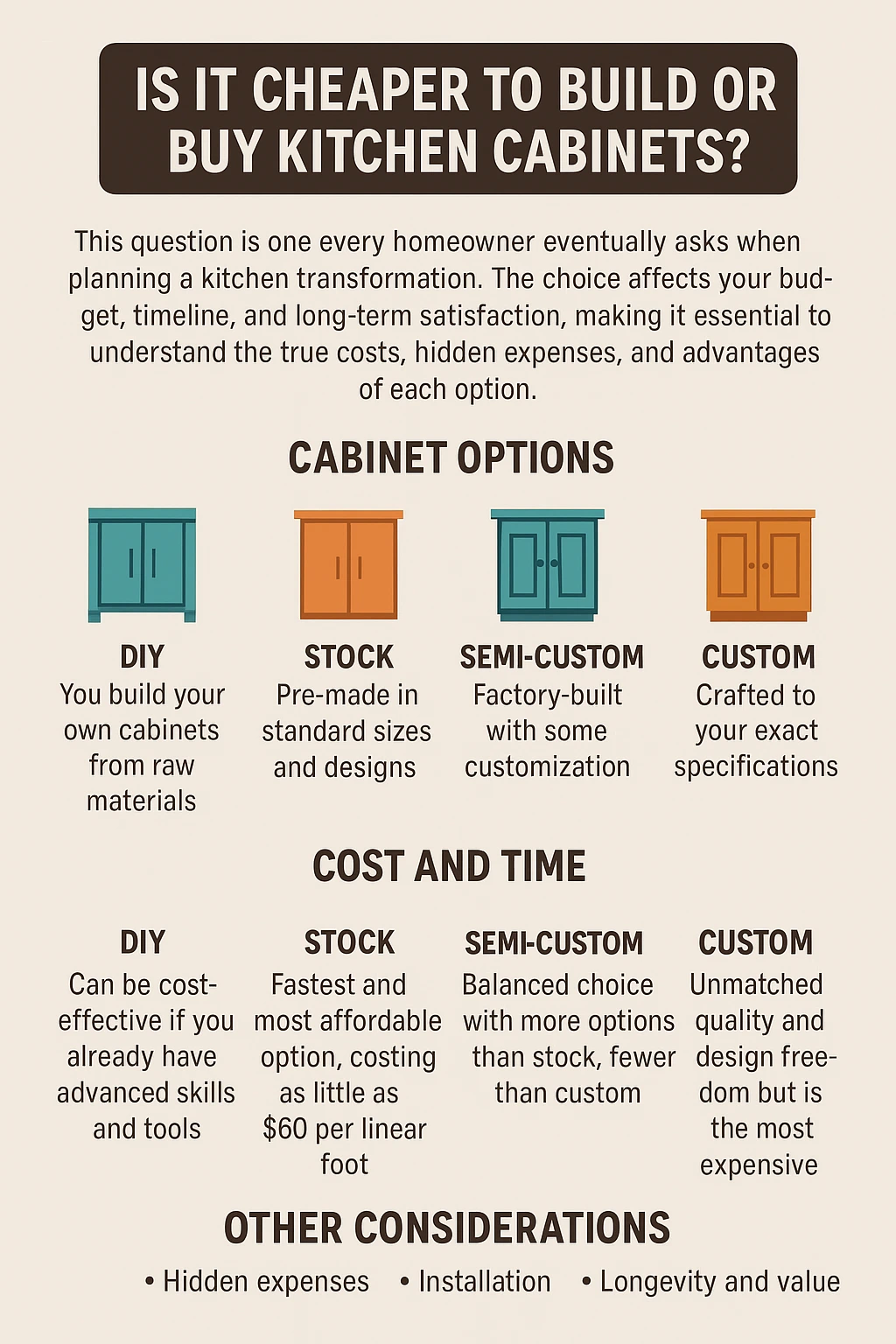
This question is one every homeowner eventually asks when planning a kitchen transformation. The choice affects your budget, timeline, and long-term satisfaction, making it essential to understand the true costs, hidden expenses, and advantages of each option. Whether you’re considering DIY cabinet building or exploring stock, semi-custom, or full custom options, knowing the real differences helps you make a confident, cost-effective decision.
- DIY is only cost-effective if you already have advanced skills and tools—otherwise, hidden expenses and time commitments often outweigh the initial savings.
- Stock cabinets deliver the fastest and most affordable option, costing as little as $60 per linear foot but offering limited customization and average durability.
- Semi-custom cabinets strike a practical balance—you gain some personal design choices with pricing and timelines between stock and custom solutions.
- Custom cabinets offer unmatched quality and design freedom at a premium, with prices from $900 to $2,500+ per linear foot and longer lead times.
- Professional installation adds reliability—expect it to add 10%–50% to your budget, but benefit from warranties, support, and a perfect fit.
- Longevity and lasting value are tied to initial quality; well-crafted custom cabinets can last 30+ years, while budget or DIY options may require replacement in 10–15 years.
- Don’t overlook your time investment—DIY projects can stretch for months, while stock cabinet installations take just days; factor your time and peace of mind into the total cost.
- Customize your choice to fit your lifestyle and goals—consider resale value, everyday use, and whether you want a truly unique kitchen or a rapid refresh.
Ultimately, focus on the approach that meets your needs for quality, function, and lasting satisfaction—then let expert guidance transform your kitchen vision into reality. Read the full article to dive deeper into your options and make the best investment for your home.
Introduction
Picture standing in your kitchen, dreaming of a transformation—only to wonder: Is building my own cabinets going to save me thousands, or will hidden costs and frustrations add up faster than I expect?
For many homeowners and design professionals, the real price of new kitchen cabinets isn’t just in the receipts; it’s hidden in time, skill, and the choices you make from day one.
Here’s the truth: stock cabinets can run as little as $60 per linear foot, while custom projects crafted by experts may reach $2,500 per linear foot or more. But the story is bigger than price tags alone.
- DIYers crave hands-on control—yet the learning curve (and tool investment) is steep.
- Homeowners often want balance: an upgrade that fits both their style and budget.
- Designers and contractors require flexibility and precise craftsmanship.
- Businesses need durability and quick turnaround above all.
What if the savings from a do-it-yourself approach are offset by mistakes or endless weekends spent in the garage—not to mention the cost of replacing cabinets that don’t stand the test of time? Or, on the flip side, does a professional touch always justify the higher investment?
In this guide, you’ll gain a clear, honest look at:
- Cost breakdowns for building versus buying (including those hidden expenses most overlook)
- The pros, cons, and real-world impact of DIY, stock, semi-custom, and full custom cabinets
- How quality, durability, and installation affect the true long-term value of your choice
You’ll discover the right questions to ask, learn from memorable customer stories, and see which route best matches your skills, budget, and vision.
Ready to uncover the cabinetry solution that aligns with your needs—and avoid common pitfalls along the way?
Let’s start by mapping out your cabinet options and what each one really means for your project, timeline, and wallet.
Understanding Cabinet Options: Build vs. Buy
Four Key Ways to Get Kitchen Cabinets
When planning a kitchen update, most homeowners face a major question: build cabinets yourself or buy pre-made, semi-custom, or fully custom cabinets?
Your core options fall into four categories:
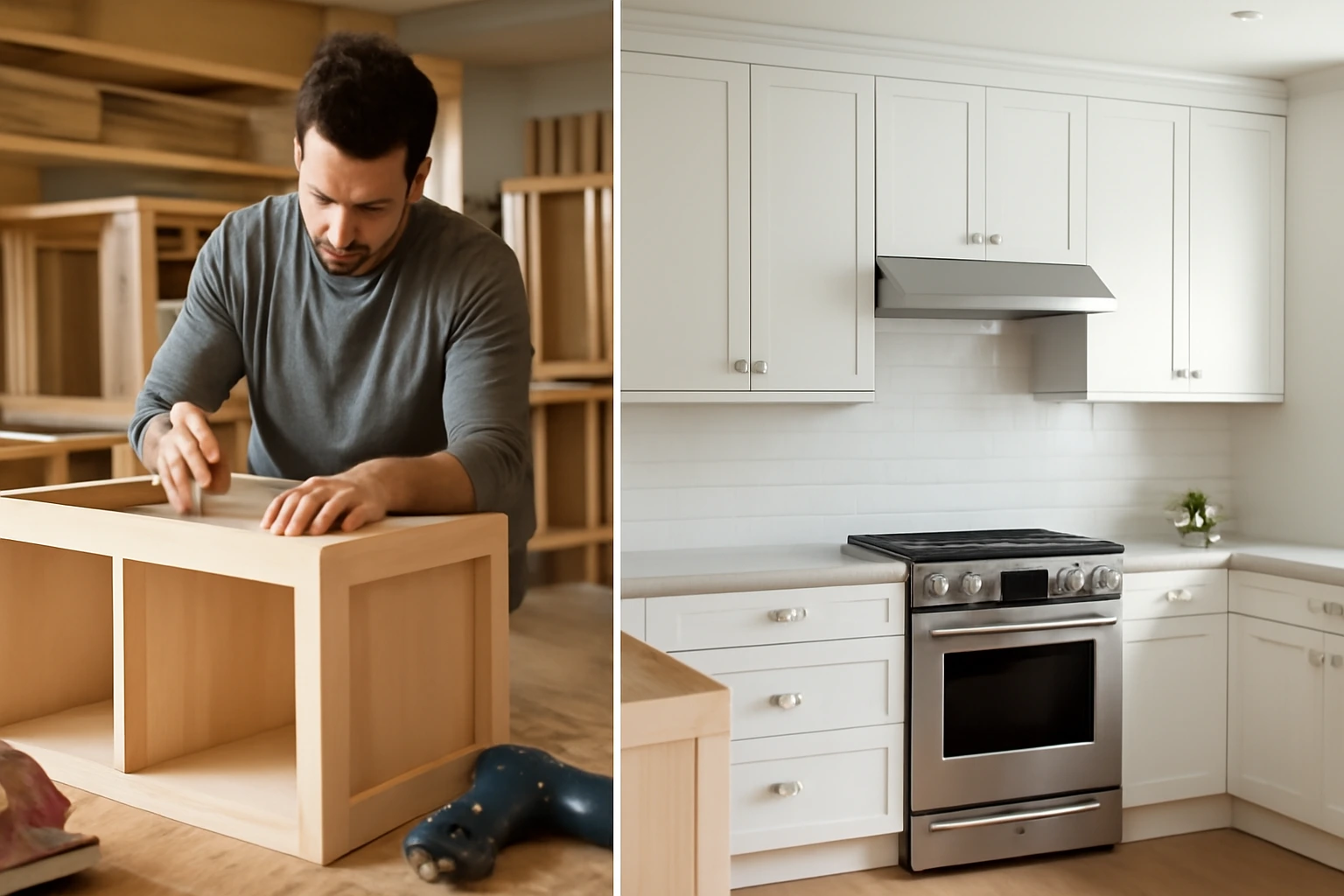
- DIY (Do-It-Yourself) building: You design and construct every cabinet yourself, starting from raw materials.
- Stock cabinets: Pre-made in standard sizes and designs, these cabinets are mass-produced for affordability and speed.
- Semi-custom cabinets: Factory-built with some customizable features—think door style, finish, or cabinet width.
- Custom cabinets: Crafted to your exact specifications by skilled professionals, offering the ultimate in design flexibility and premium finishes.
Who’s Best Suited for Each Path?
Different options attract different types of buyers. Consider these typical profiles:
- DIYers: Hobbyists with woodworking skills, a well-equipped workshop, and time to spare.
- Homeowners: Most seek balance—opting for stock or semi-custom options for value and convenience.
- Designers/Contractors: Often select custom to match precise project needs or achieve a specific style.
- Businesses: Favor professional solutions for durability, fit, and speed.
“Building your own cabinets is only cost-effective if you already have the skills and toolkit—otherwise, the risks and costs can outweigh the savings.”
Customization, Quality, and Complexity
The differences between these options go way beyond price. Here’s what you need to know:
- DIY: Maximum customization, lowest material cost, but requires expertise and is labor-intensive.
- Stock: Lowest up-front cost and fastest to install, but limited in size, finish, and design flexibility.
- Semi-custom: A middle ground—some personalization without the wait or price of true custom work.
- Custom: Matches your vision exactly; highest-quality craftsmanship, unlimited options, longest lead time, and highest price.
Stock cabinets can cost as little as $60 per linear foot, while custom solutions can reach $2,500 per linear foot or more—choose based on your priorities and resources.
What Should You Consider Before Deciding?
Key factors that affect your project’s success:
- Skill level and tool access: DIY requires advanced abilities and thousands in equipment investment.
- Timeline: Stock cabinets install quickly (days), custom work takes weeks to months.
- Design goals: Unusual layouts, premium finishes, or statement details require custom or semi-custom work.
Picture this: A homeowner with a modern kitchen chooses semi-custom cabinetry to get a dream color and handle style. Meanwhile, a DIYer spends evenings for months, crafting rustic cabinets for a cottage kitchen—proud, but exhausted.
The IL Cabinets Ethos
No matter your choice, craftsmanship, customization, and customer focus remain at the heart of every IL Cabinets project. “We believe every kitchen tells a story—let’s make yours functional, beautiful, and uniquely yours.”
Takeaway: The right cabinet route depends on your skills, budget, and vision. Ask yourself: how much time, customization, and peace of mind do you want—then let expertise guide your investment.
Cost Breakdown and Financial Considerations
Comparative Cost Analysis
When deciding between building or buying kitchen cabinets, start with the numbers.
For a typical kitchen (20-30 linear feet), average prices look like this:
- Stock cabinets: $60–$500 per linear foot ($1,200–$15,000+ total)
- Semi-custom cabinets: $300–$1,500 per linear foot ($6,000–$45,000+ total)
- Custom cabinets (professional): $900–$2,500 per linear foot ($22,500–$87,500+ total)
- DIY/built by homeowner: $200–$500 per linear foot (materials only; $4,000–$15,000+ total, plus tools)
What drives these differences? The cost of materials, the amount of skilled labor required, finish options, and installation fees.
If you’re going DIY, factor in extra expenses:
- Tools: $500–$2,000+ if you don’t already own them
- Hardware and specialty components
- Delivery or material transport
- Installation services (if you eventually call in help)
Here’s a quick real-world scenario:
- Stock cabinets, installed: 20 ft × $250 (midrange) = $5,000 (plus install)
- DIY (tools on hand): Materials for 20 ft = $6,000–$10,000; labor is your own time
- Custom (installed): 20 ft × $1,200 = $24,000+
“Even a handy homeowner can spend over $8,000 in hidden costs before realizing custom wasn’t as ‘cheap’ as planned.”
Hidden and Long-Term Costs
Don’t let hidden or long-term costs sneak up on you.
Consider these often-overlooked expenses:
- Time commitment: DIY can take weeks or even months, compared to a few days for stock units
- Mistakes/remakes: Errors in measurement or cutting can double material costs
- Project delays: Custom or semi-custom cabinets require longer lead times; DIY projects stall without uninterrupted weekends
Over the years, additional costs can add up:
- Maintenance or repairs: Cheaper stock or DIY cabinets may need replacement sooner, raising long-term costs
- Professional installation: Usually adds 10%–50% to upfront prices but brings peace of mind and warranties
- Opportunity cost: The value of your own time is real—especially compared to time spent with family or on other home projects
“Every hour spent troubleshooting is money on the table—sometimes, true value is buying back your time.”
Key Takeaways
- DIY is only truly “cheaper” if you already own tools, have advanced skills, and your time is low-cost to you.
- Stock cabinets are fastest and budget-friendly, but customization and long-term durability can be limited.
- Custom cabinets have the highest upfront price, but deliver unmatched quality, fit, and lasting value.
Picture this: You’ve just finished assembling your DIY cabinets, only to realize the doors don’t align… or, you walk into your kitchen and guests admire seamless custom cabinetry tailored to your space.
Weigh both dollars and hours before making your decision—what feels cheaper upfront may not be, long-term. The best value is found where quality, longevity, and the right fit for your life come together.
Quality, Durability, and Value Over Time
Build Quality and Materials
Cabinet quality can vary dramatically depending on how—and by whom—they’re made. Each option delivers a different level of workmanship, fit, and material durability.
- DIY-built cabinets rely heavily on the builder’s skill, patience, and access to tools. Results range from basic just-functional builds to artisan-level craftsmanship.
- Stock cabinets use mass-manufactured materials—usually a mix of particleboard, MDF, or lower-grade plywood.
- Semi-custom cabinets step up to solid plywood boxes, mid-range hardwoods, and customizable features.
- Custom cabinets feature high-end hardwoods, full plywood construction, advanced joinery, and detailed finishes for a truly bespoke appearance.
Fit and finish are often the giveaway. Factory-made cabinets boast uniformity but can lack the meticulous details of custom joinery. Custom-built and well-crafted DIY options shine with hand-fit joints and unique touches, while lower-end DIY or stock lines show visible seams and less robust construction.
“You can feel the difference in every drawer pull and door swing—factory smooth or artisan-satisfying” makes for a memorable lifestyle image.
Longevity and Value
Initial quality drives longevity. Cabinets built with solid wood and precise joinery can last 20–50 years—or more—with proper care. Lower-priced stock cabinets may need replacing in as little as 10–15 years, especially in busy kitchens.
- Custom and semi-custom cabinets usually come with 5–lifetime warranties, plus aftercare support.
- Stock cabinets offer basic 1–5 year warranties, if any.
- DIY cabinets have no formal warranty; long-term durability depends on both materials and your craftsmanship.
Maintenance is another key factor:
- Premium finishes and protected surfaces make professional and custom cabinets easier to clean and touch up.
- DIY and basic cabinets may show wear sooner if edge banding, hardware, or painting aren’t up to standard.
“Quality-built cabinets are an investment you feel every day—and see every year you own your home.”
Investing in the Right Value
When choosing your path, think about:
- How often do you want to remodel?
- Is long-term durability or short-term savings more important to you?
- Can you afford to ‘learn on the job’ with your main kitchen, or does peace of mind matter most?
Picture opening your cabinets five, ten, or twenty years from now—will they still feel solid and beautiful, or is a replacement already on your to-do list?
For lasting value, investing in quality craftsmanship and durable materials pays off in longevity and everyday enjoyment. Prioritize what matters most to your home, your timeline, and your peace of mind.
Project Suitability: When to Build, Buy, or Customize
Assessing Project Needs
Choosing between building, buying, or customizing kitchen cabinets starts with honestly assessing your skill level and setup.
If you already have a dedicated workshop, advanced woodworking tools, and years of hands-on experience, DIY building can be an option. For most, it’s not practical unless you deeply enjoy the process and value total control—even then, expect to devote 80–200+ hours.
Ask yourself:
- Do I have professional-grade tools, or will I need to purchase or rent?
- Am I comfortable with complex measurements, cutting, and joinery?
- What’s my realistic timeline—days, weeks, or months?
Stock and semi-custom cabinets are the best fit for straightforward layouts, budget-sensitive updates, or when speed is key. Custom cabinets shine in unique spaces, high-value homes, or when specific materials and features are non-negotiable.
Use Cases and Real-World Examples
Picture this: In a compact starter kitchen, a homeowner opts for stock cabinets—saving $10,000+ compared to custom, and finishing the project in just days.
A busy professional commissions IL Cabinets for a high-end remodel, demanding period-accurate woodworking and integrated storage—”The result was breathtaking, and every drawer glides perfectly,” says one satisfied customer.
For an odd-shaped attic apartment, only custom-built cabinets could maximize storage and fit the angles, turning wasted space into a showpiece.
Common project scenarios:
- Starter/budget kitchens: Stock ($1,200–$5,000)
- Family kitchens/major upgrades: Semi-custom ($6,000–$25,000)
- Unique layouts/designer homes: Custom ($20,000+)
- Skilled DIY projects: Materials ($4,000–$10,000), plus value for your time
Risks and Rewards
DIY comes with hidden risks: small measurement errors can cost days and hundreds of dollars, and code compliance isn’t always obvious.
Expect:
- Delays from rework
- Extra expenses for missed hardware/tools
- Possible permits or failed inspections
Professionally built cabinets offer peace of mind with:
- Design guidance
- Warranties
- Stress-free installation and aftercare
Customer testimonials consistently highlight that “custom cabinetry delivers lasting value and transforms the space beyond expectations.”
When you consider your skills, available time, and the importance of getting it right, the best path becomes clear. The smartest investment is the one that fits your goals, your lifestyle, and delivers the beauty and reliability your kitchen deserves.
Installation, Timeframe, and Project Management
Installation Requirements
How your kitchen cabinets are installed can determine not just the look but also the lifespan and value of your space.
Stock, semi-custom, and custom cabinet options each bring different levels of complexity and expertise.
- DIY-built cabinets: Installation requires advanced skills and precise measuring. If you’re building and installing yourself, expect challenges with leveling, alignment, and fitting around plumbing or electrical work.
- Stock cabinets: Typically the most straightforward to install. Many homeowners tackle these themselves, but professionals ensure a secure fit. Installation costs can add 10–25% to your material costs.
- Semi-custom and custom cabinets: Installation demands precision. Professional installers or contractors handle these most often, especially with unique dimensions or high-end finishes. Labor can add 15–50% to your cabinet budget.
“The installation is where the magic happens—or where costly mistakes reveal themselves.”
“Even a flawless cabinet is only as good as its installation.”
Time and Total Project Impact
Time commitment is where the differences get real—impacting daily routines, living space, and overall project satisfaction.
- DIY projects: Building and installing cabinets can stretch from 3 weeks to 3 months. This depends on skill, available hours, and access to tools.
- Stock cabinets: Once delivered, install can take 1–3 days for a pro or a motivated DIYer. Quick turnaround is a big advantage here.
- Semi-custom and custom cabinets: Fabrication alone can require 4–12 weeks. Installation typically adds another 3–7 days once the cabinets are ready.
Installation time affects kitchen downtime, so if you need your space back quickly, stock cabinets are almost always the winner.
“Every extra week of renovation shapes how you feel about your home—and your investment.”
Project Management Demands
Who’s steering your cabinet project? The answer can determine your stress level and the final result.
- DIY route: You’re head project manager—scheduling, sourcing, building, and troubleshooting. This can be deeply rewarding or exhausting, depending on your experience.
- Stock and semi-custom buyers: Professional installers or contractors take the helm, handling logistics and problem-solving. Less hands-on but higher confidence in the outcome.
- Custom cabinetry: Firms like IL Cabinets offer design support, regular updates, and walk you through each stage—for optimal communication and peace of mind.
Picture this: Walking into your kitchen after a seamless install versus juggling unpredictable tasks for weeks.
The big takeaway? Installation and project management add real-world cost and time to any cabinet solution. For most, professional installation offers reliability, speed, and that “done right the first time” reassurance. The right choice comes down to your tools, timeline, and appetite for hands-on work.
Maximizing Return: Making the Best Choice for Your Home
Value, Investment, and Lifestyle Fit
Choosing your approach to kitchen cabinets directly shapes your home’s value, your daily experience, and your long-term investment.
A high-quality cabinet investment can boost home resale value, while budget options may mean quicker replacements down the line.
When evaluating options, start by asking yourself:
- What is my total budget—and where do I want to invest most?
- How important is personalization, and do I need a look that truly stands out?
- Do I plan to sell soon, or is this my forever home?
- What timeline am I comfortable with—weeks, months, or just days?
Custom solutions from cabinet makers like IL Cabinets deliver exceptional craftsmanship and offer a wide palette of styles, allowing you to match your cabinetry to your life and future goals.
“Picture this: a kitchen tailored to your every habit, finished to perfection by expert hands—this is investment meeting daily enjoyment.”
Making an Informed Decision
Your decision should reflect real-world constraints and aspirations.
Consider these key factors before taking your next step:
- Skill level: Building your own cabinets is cost-effective only if you have advanced tools and woodworking expertise.
- Time commitment: DIY projects may take several weeks or more, while stock cabinets can be installed in just days.
- Total cost: Don’t forget to factor in tools, installation, and your own labor.
- Quality and longevity: Professionally built custom cabinets may last twice as long as DIY or stock options—up to 30 years or more.
- Customization: Stock is quickest but least flexible. Custom delivers full freedom and the highest durability.
- Peace of mind: Professional support (design help, warranties, aftercare) can save headaches—and sometimes money—down the road.
“If you value reliability, expert support, and lasting beauty, professional installation often pays for itself in enjoyment and resale.”
At IL Cabinets, we guide clients through every decision—offering honest advice, precise design, and clear communication—so your project is a success, whichever path you choose.
A smart cabinetry choice is about more than price—it’s about matching function, style, and satisfaction with your unique needs and timeline. Investing in the right solution means enjoying your space for years to come and adding real value to your home.
Conclusion
Choosing between building or buying kitchen cabinets isn’t just a financial decision—it’s an investment in your home’s comfort, daily enjoyment, and future value.
When you align your skills, budget, and vision with the right cabinetry approach, you create a space that’s both functional and truly yours.
—
Here’s how to move forward with confidence:
- Clarify your priorities: Decide whether your project needs speed, customization, or cost efficiency most.
- Assess your readiness: Be honest about your skillset, tool access, and available time before diving into a DIY build.
- Consider longevity: Weigh up-front savings against the lasting value and peace of mind that come with professional craftsmanship.
- Budget holistically: Factor in installation, warranties, tool costs, and your own time—not just sticker price.
- Seek expert guidance: Reach out for a consultation to discover what’s possible for your unique space and goals.
—
Ready to take the next step toward your dream kitchen?
- List your must-have features, finishes, and storage needs.
- Schedule a design consultation with a trusted cabinet professional—bring inspiration photos and your most important questions.
- Set your timeline and budget, then choose the path that fits your life—not just your bottom line.
—
A beautiful kitchen starts with smart choices—crafted for your lifestyle, built to last.
Let your cabinetry project be a reflection of the way you live and the future you’re creating. Elevate your space, invest in what matters, and transform every day with the quality you deserve.
“Your ideal kitchen isn’t just a purchase—it’s a promise to yourself that beauty, durability, and craftsmanship belong in your home.”
Learn more about professional craftsmanship on our Custom Cabinets Service Page to compare real costs.”
FAQs
1. Is it cheaper to build or buy kitchen cabinets for a small kitchen?
Small kitchens usually cost less with stock or semi-custom cabinets unless you already have advanced DIY tools and skills.
2. What tools do I need to build cabinets myself?
Expect to invest in saws, clamps, sanders, routers, and finishing tools—often $500–$2,000+.
3. Are custom cabinets worth the higher price?
Yes, if you want long-term value, unique layouts, or premium materials.
4. How long does it take to build cabinets vs buying them?
DIY can take weeks or months; stock installation can take just 1–3 days.
5. What’s the most cost-effective option overall?
Semi-custom cabinets usually offer the best balance of price, quality, and customization.